There is something almost defiant about brunch. It refuses to be breakfast. It declines to be lunch. It shows up late, orders a cocktail before noon, and somehow convinces an entire restaurant to reorganize itself around its preferences. The history of brunch in American restaurants is, at its core, a story about how a single meal managed to reshape not just what people eat on Sunday mornings, but how restaurants think about profit, identity, and survival.
A British Idea That Found Its True Home in America
Brunch did not begin in a Manhattan bistro with exposed brick and a playlist of soft indie rock. It began, at least conceptually, in Victorian England. The word 'brunch' is widely credited to British writer Guy Beringer, who proposed the meal in an 1895 essay in Hunter's Weekly as a Sunday alternative to the heavy post-church dinner. Beringer's pitch was essentially social: a lighter, later meal that allowed Saturday-night revelers to recover without the obligation of a formal midday feast.
The idea was clever but did not immediately ignite a cultural movement in Britain. What Beringer described as a liberating ritual for the leisured class took decades to find fertile ground. That ground turned out to be twentieth-century America, where a growing middle class, urbanization, and an evolving relationship with Sunday — less defined by church attendance and more by leisure — made the concept irresistible.

As an Amazon Associate, I earn from qualifying purchases.
New York City and the Dish That Defined a Meal
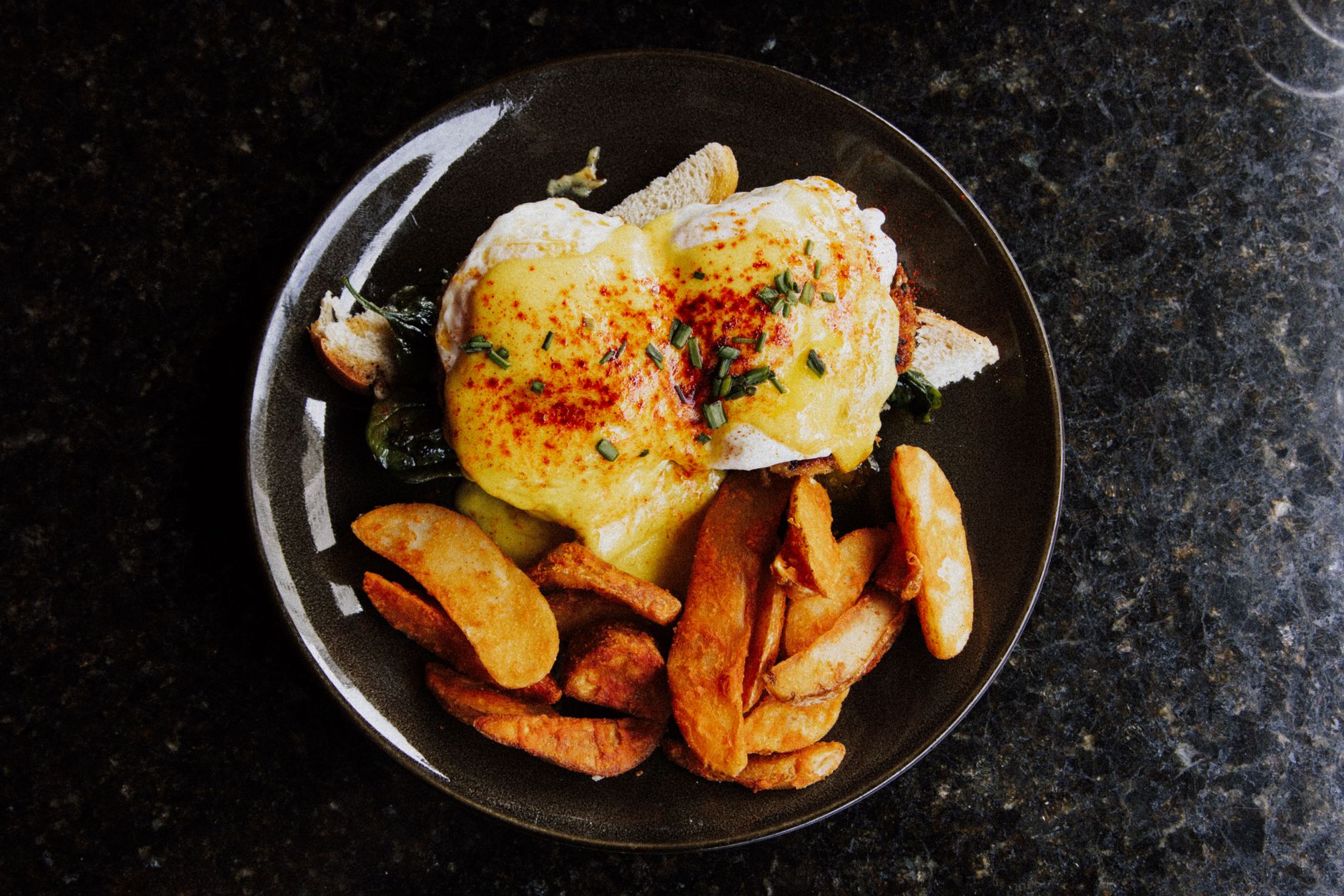
While the word crossed the Atlantic slowly, the food culture that would anchor brunch was already developing in American cities. Eggs Benedict — widely considered the flagship brunch dish — is traced to New York City in the 1890s, with competing origin stories involving Delmonico's restaurant and the Waldorf Hotel. Whether it was a hungover banker named Lemuel Benedict requesting a restorative plate, or a regular patron at Delmonico's inspiring the kitchen, the dish itself captured something essential: richness, indulgence, and a certain theatrical quality that made eating it feel like an event rather than mere sustenance.
Eggs Benedict set a template. Brunch food, at its best, should feel slightly decadent — more effort than a weekday breakfast, less austere than a formal dinner. Hollandaise sauce, runny yolks, smoked salmon, buttery pastries: these are not foods you eat in a hurry. They signal that you have decided to enjoy your morning, and that decision, it turned out, was one Americans were increasingly eager to make.
The Mid-Century Spread: From Hotel Dining Rooms to Neighborhood Joints
Brunch remained largely a luxury proposition through the early twentieth century — something practiced in hotel dining rooms and private clubs, where the well-off could linger over eggs and champagne without worrying about the bill. The real democratization came after World War II, as suburban expansion, the five-day work week, and a booming restaurant industry gave ordinary Americans both the free time and the dining options to make Sunday morning a social occasion.
Through the 1950s and 1960s, brunch quietly spread into the vocabulary of American restaurant culture. Diners extended their breakfast hours. Hotel restaurants formalized brunch buffets. By the 1970s, in cities like New York, San Francisco, and Chicago, a recognizable brunch culture had taken shape: newspapers spread across small tables, eggs in various forms, coffee refilled without asking, and no particular urgency to leave.
As an Amazon Associate, we earn from qualifying purchases.
The 1980s and 1990s: Brunch Becomes an Identity Statement
The real cultural elevation of brunch happened in parallel with the broader American restaurant renaissance of the 1980s. As fine dining began to influence casual restaurants, and as chefs started to be treated as creative figures rather than kitchen laborers, brunch became a space for culinary experimentation that breakfast had never allowed.
Restaurants discovered that brunch was not just a social occasion — it was a positioning tool. A place that did brunch well signaled that it understood hospitality, creativity, and the rhythms of its neighborhood. The meal attracted a specific kind of customer: educated, unhurried, willing to spend. As restaurant competition intensified in major cities, brunch became a way for establishments to differentiate themselves without the enormous investment of a new dinner menu.
By the 1990s, brunch had developed its own iconography. The Bloody Mary. The stack of pancakes taller than it had any right to be. Avocado, even before it became a cultural shorthand. These were not accidental choices — they were the product of restaurants learning, largely through trial and error, what people actually wanted when they sat down at eleven on a Sunday morning.
Alcohol and the Economics of the Weekend Meal
One of the less obvious reasons brunch became so important to American restaurants is purely financial. Alcohol margins are substantially higher than food margins. A brunch that includes cocktail service — mimosas, Bloody Marys, bellinis — is significantly more profitable per table than one that does not. This economic reality shaped the entire format of weekend brunch service.
The rise of bottomless mimosa and prix-fixe brunch formats in the 2010s created a distinct operational and legal challenge for restaurants around alcohol service laws, which vary significantly by state. Restaurants in states with strict alcohol regulations had to navigate blue laws, licensing restrictions, and liability concerns around unlimited drink service. Some states prohibited or heavily restricted the bottomless format. Others required food to be served alongside any alcohol. The result was a patchwork of brunch experiences across the country — and a forcing function that made operators think carefully about how they structured their menus and trained their staff.
The bottomless brunch model also introduced a new set of kitchen challenges. Fixed-price formats mean predictable revenue but unpredictable pacing — tables that linger for three hours occupy the same real estate as tables that turn in ninety minutes. Restaurant operators learned to staff Sunday mornings differently from Friday nights, often scheduling more floor staff relative to kitchen staff, and training servers specifically for the social dynamics of extended brunch service.
How Brunch Reshaped Restaurant Design and Operations
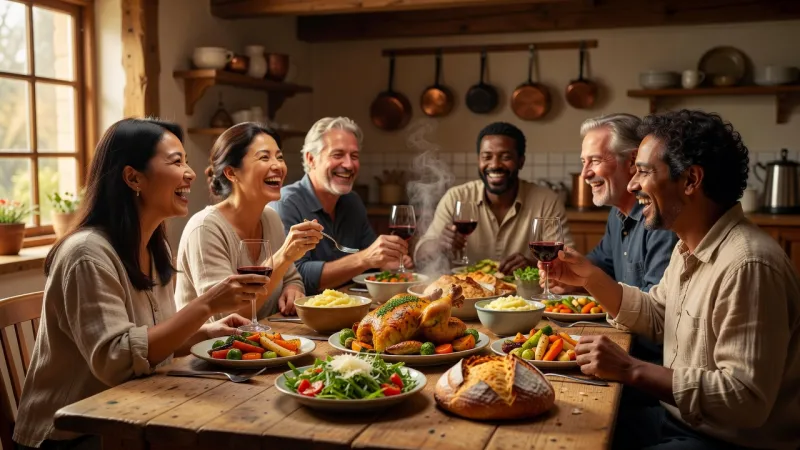
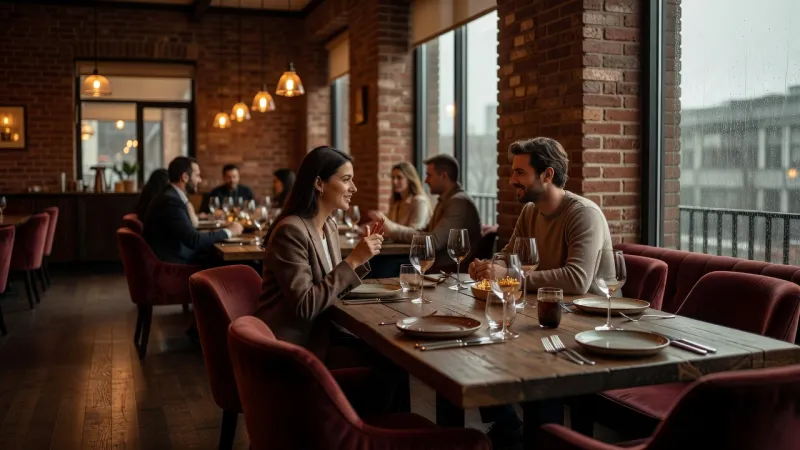
The influence of brunch on the physical and operational design of restaurants is underappreciated. Natural light, once an afterthought in restaurant planning, became a genuine consideration because brunch customers prefer it. Large communal tables, flexible seating arrangements, and acoustics that accommodate conversation rather than suppress it all reflect the demands of a daytime meal with a social rather than romantic purpose.
Menu engineering for brunch is its own discipline. The challenge is serving a meal that works across a two-to-three-hour window, accommodating guests who arrive wanting something light and guests who want something substantial, while managing a kitchen that may be operating with a different crew than the dinner service. Dishes need to hold well, be prepared quickly, and photograph appealingly — the last criterion becoming increasingly important as social media turned brunch into one of the most documented meals in American food culture.
The Instagram effect on brunch deserves its own examination. The visual extravagance of modern brunch — towering French toast constructions, color-saturated smoothie bowls, elaborately garnished cocktails — is not entirely accidental. Restaurants learned that a photogenic dish generates organic promotion, and brunch, served in daylight with time to spare, is the meal most likely to be photographed and shared. This created a feedback loop in which brunch menus became increasingly theatrical, and customers came partly for the experience of documenting it.
The Globalization of Brunch: Beyond Eggs and Mimosas
Contemporary American brunch is no longer a single cuisine or a unified format. As American cities became more diverse and American palates more adventurous, brunch absorbed influences from across the culinary world. Shakshuka — eggs poached in spiced tomato sauce — migrated from Middle Eastern and North African kitchens into mainstream brunch menus. Dim sum, which had always functioned as a kind of Chinese brunch in its own right, became recognized as such by a broader audience. Korean fried chicken appeared alongside waffles. Chilaquiles and huevos rancheros from Mexican culinary tradition became weekend staples far outside their original communities.
This cross-cultural expansion reflects something important about what brunch became: a format rather than a fixed menu. The leisurely Sunday meal organized around eggs, some form of starch, something sweet, and something to drink is a structure flexible enough to accommodate almost any culinary tradition. That flexibility is part of why brunch proved so durable as a cultural institution — it could be reinvented continuously without losing its essential character.
Brunch as Restaurant Identity: The Stakes Today
For many American restaurants today, brunch is not an afterthought — it is a cornerstone of how they define themselves and generate revenue. In cities with high real estate costs and intense competition, a successful brunch service can mean the difference between a restaurant that survives and one that does not. Weekend brunch lines have become a form of social proof: a queue outside a restaurant on Sunday morning signals that the place has earned its reputation.
This has led to a professionalization of brunch culture that Beringer almost certainly never imagined. Restaurants now hire dedicated brunch chefs. They run separate training programs for weekend floor staff. They design cocktail menus specifically calibrated for morning service — lower alcohol, more citrus, more carbonation. Some restaurants exist almost exclusively for brunch, building their entire identity and operational model around two or three days of service per week.
The cultural weight of brunch also means that doing it badly carries real consequences. A restaurant that disappoints on a Saturday or Sunday morning loses not just one table but the word-of-mouth and social media endorsement that brunch, more than almost any other meal, tends to generate. The stakes are high precisely because the expectations are so thoroughly established.
What Brunch Tells Us About American Food Culture
The persistence and growth of brunch as an institution reveals something genuine about American attitudes toward food, time, and sociability. It emerged as a small act of resistance against Victorian formality — a meal that said Saturday night does not have to end with Sunday morning regret. It grew because it gave people permission to eat richly, drink at an unusual hour, and linger without apology.
Its transformation from a minor novelty into a cultural institution happened not through any single moment of invention but through the accumulation of small decisions: a restaurant that extended its hours, a chef who put something unexpected on the menu, a city that loosened its liquor laws, a culture that decided Sunday morning was worth celebrating. That is, in the end, how most food traditions actually form — not by design, but by the gradual consensus of people who keep showing up and ordering the same thing until it becomes, simply, what you do.
Brunch was never supposed to exist as a serious meal. It was proposed as a light alternative, a social convenience, a way to bridge two halves of a day. Instead, it became something far more significant: a lens through which American restaurants understand their customers, their communities, and themselves.
Sources
Every factual claim in this article was independently verified against the following sources:
- The Birth of Brunch: Where Did This Meal Come From Anyway? — smithsonianmag.com
- Unraveling the Mystery of Eggs Benedict: Delmonico's vs. Waldorf in NYC - Route 1 Views — route1views.com
- How Bottomless Brunch Cocktails Became a Must-Have | Eater — eater.com