Somewhere between a restaurant and a dinner party, in a borrowed kitchen or a repurposed warehouse, a chef plates a dish that doesn't exist anywhere on a permanent menu. A few dozen guests eat it, react to it, and talk about it for weeks. The chef learns something irreplaceable. That, in its essence, is what a pop-up dinner is — and why the format has become one of the most consequential laboratories in American food culture.
But calling a pop-up dinner simply a "temporary restaurant" undersells what actually happens at these events. To understand pop-up dinners properly, you need to understand the specific pressures and freedoms the format creates, the history behind how it developed, and the very particular ways it serves chefs at every point in their careers.
The Basic Mechanics: What Actually Happens at a Pop-Up Dinner
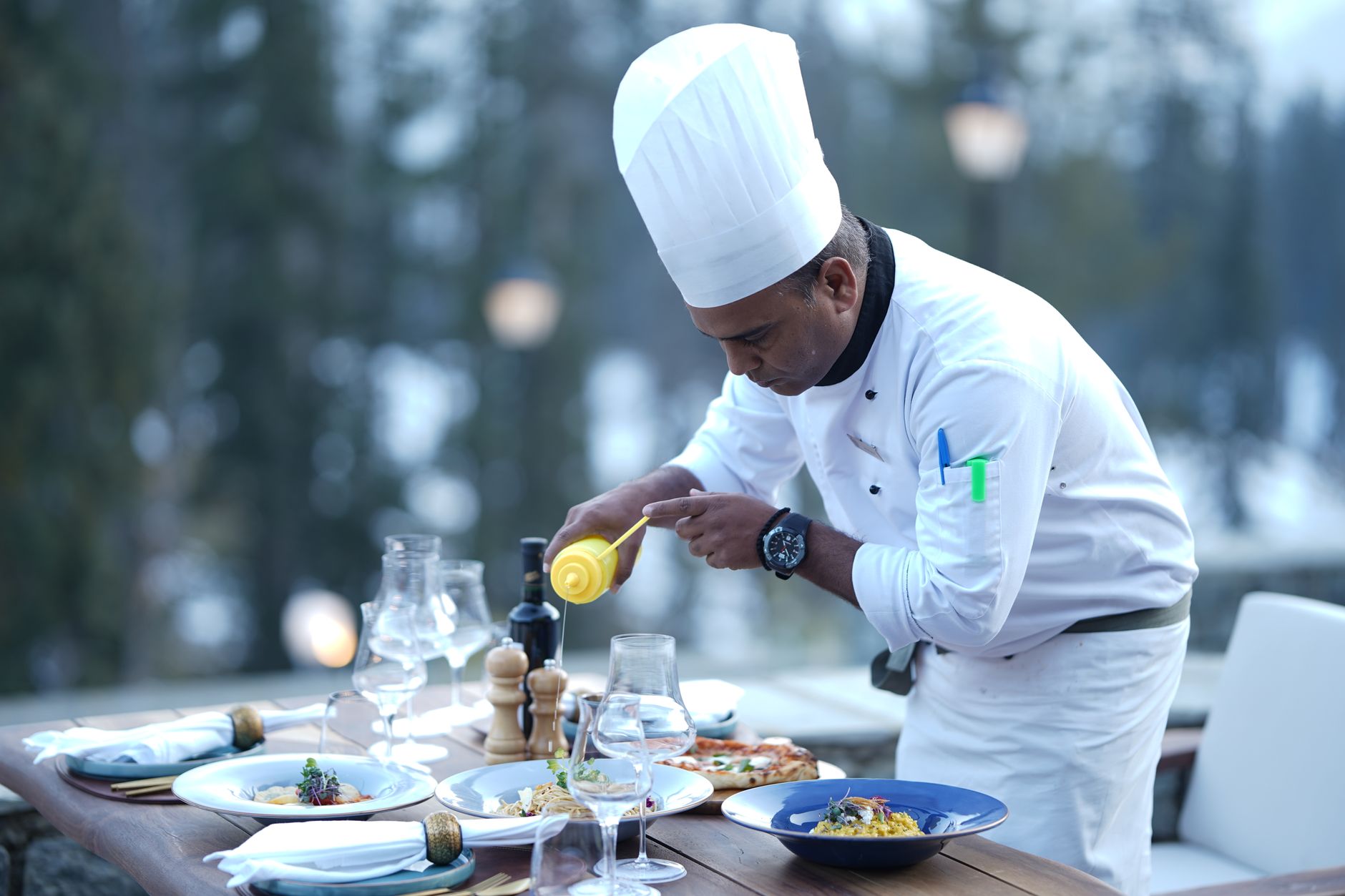
A pop-up dinner is a temporary, ticketed dining event hosted by a chef or culinary team in a venue that is not a permanent restaurant. That venue might be a private home, a bar between lunch and dinner service, a gallery, a farm, a rooftop, or even an existing restaurant that a visiting chef takes over for a single night.
As an Amazon Associate, I earn from qualifying purchases.
The format is almost always prix fixe — a set menu of multiple courses served to everyone at the same time. Tickets are sold in advance, often through direct mailing lists, social media, or platforms that handle reservation and payment. The guest count is typically small, frequently under fifty people, which is part of what makes the experience feel distinct from conventional dining.
From a logistical standpoint, pop-ups operate without the permanent overhead that defines a brick-and-mortar restaurant. There is no long-term lease, no full-time front-of-house staff on payroll, no standing inventory to maintain. The chef designs a tight, specific menu for a known number of guests and executes it once. This is not a weakness — it is a structural feature that shapes everything else about the format.
A Brief History: How the Pop-Up Dinner Emerged in American Food Culture
The roots of the pop-up dinner are harder to pin down than its current popularity might suggest. Informal underground dining — supper clubs, guerrilla restaurants, secret dinners in unlicensed spaces — has existed in American cities for decades, partly as a response to the cost and regulatory complexity of opening a conventional restaurant.
The format gained broader cultural visibility in the mid-2000s and accelerated through the 2010s as social media gave chefs a direct channel to build audiences without institutional backing. A cook with a compelling Instagram presence and a borrowed kitchen could assemble fifty paying guests without a publicist, a review from a major critic, or a James Beard nomination. That democratization was genuinely new.
As an Amazon Associate, we earn from qualifying purchases.
The food truck movement, which expanded rapidly around the same period, normalized the idea of serious culinary ambition operating outside permanent restaurant structures. Pop-up dinners extended that logic indoors, adding intimacy and a more deliberate tasting-menu sensibility. The two movements reinforced each other and together shifted how the industry thought about what a chef's "platform" needed to look like.
By the 2010s, established chefs were running pop-ups alongside their restaurants, not just as a stepping stone but as a creative outlet that their permanent menus couldn't accommodate. What had begun as a workaround became a recognized and respected format in its own right.
The Creative Logic: Why the Format Works as a Laboratory
Constraint Produces Clarity
When a chef designs a pop-up menu, they typically work with a single cohesive theme, technique, or ingredient narrative across every course. The limited guest count and single-service structure mean that every element of the meal can be prepared with a precision that a full restaurant kitchen running multiple covers across several hours cannot always sustain. The constraint of cooking one menu, once, for a manageable number of people, produces a kind of focus that is genuinely difficult to replicate in a permanent operation.
Real Feedback, Without the Stakes of a Permanent Menu
A dish on a permanent restaurant menu represents a significant investment. Changing it, removing it, or admitting it doesn't work carries real operational and reputational cost. A dish served at a pop-up carries none of that weight. The chef can observe how guests engage with it, listen to responses, and draw conclusions — then either develop the dish further or abandon it entirely. This is genuine iterative testing, and it happens in the presence of paying guests who have self-selected into an adventurous dining context.
The audience at a pop-up dinner is not a random sample of diners. They sought out the event, often follow the chef's work, and arrive with expectations calibrated to experimentation. That makes their feedback unusually useful. A lukewarm response from a pop-up audience tells a chef something important. Enthusiasm tells them even more.
The Freedom to Take Risks That Permanent Menus Won't Allow
Consider the economics of a permanent restaurant: every menu item needs to sell consistently, appeal to a broad enough range of guests, and integrate into the kitchen's workflow across a full service. This is not a creative environment that favors extreme experimentation. A chef who wants to explore a hyper-regional cuisine, a single unfamiliar protein, a technique borrowed from a completely different culinary tradition, or a concept that might alienate half the regular clientele — that chef needs a different venue for those ideas.
Pop-up dinners provide exactly that. The temporary nature of the format is a permission structure. Guests understand they are attending something that exists outside the normal restaurant context, and that understanding shifts what is socially and culinarily acceptable to attempt. This is why you see some of the most genuinely unusual and forward-thinking cooking in the American food scene happening not in permanent restaurants but in pop-up formats.
Who Uses Pop-Up Dinners — and Why It Differs by Career Stage
Early-Career Chefs Building an Audience
For a cook who has trained in professional kitchens but hasn't yet opened their own restaurant — and may not have the capital or credit history to do so — a pop-up dinner series is a way to establish an independent identity. It proves that people will pay to eat their food specifically. It builds a mailing list. It generates word of mouth. And it develops the operational competence that comes only from running a full service from the chef's position rather than from a line cook's station.
This is not a new dynamic — chefs have always needed ways to test their independent viability before committing to a lease — but the current pop-up format makes it more visible and more socially legible than earlier equivalents. Running a successful pop-up series is now a recognized credential in the culinary world.
Mid-Career Chefs Exploring Beyond Their Restaurant's Identity
A chef who has spent years developing a restaurant with a specific identity faces a particular creative tension. The restaurant's brand is an asset, but it is also a boundary. The chef may have deep curiosity about techniques, cuisines, or ingredients that don't fit what the restaurant does. A pop-up, often staged under a different name or framing, lets them pursue those interests without confusing or alienating their existing audience.
Some of the most interesting pop-up work in American cities happens when an established chef stages a one-night event exploring a tradition very different from their signature style — a classically trained French-technique chef doing a deep dive into the flavor logic of a specific regional Asian cuisine, for example, or a chef known for minimalist tasting menus spending an evening with maximalist, layered dishes rooted in their family heritage. These events would make no sense on a permanent menu. As pop-ups, they are exactly what the format is for.
Established Chefs Collaborating Across Culinary Worlds
Guest chef collaborations — where two chefs from different restaurants, cities, or culinary traditions cook together for a single event — are one of the most creatively generative uses of the pop-up format. Neither chef could produce the resulting meal alone. The collaboration produces something genuinely unrepeatable, which is part of its appeal to guests and part of its value to the chefs involved.
These collaborations also function as a kind of informal professional development. Chefs who cook alongside each other in a pop-up setting share technical knowledge, discuss approaches to flavor, and observe each other's habits and instincts in a context more intimate than any industry conference or panel discussion could provide.
The Guest Experience: What Makes a Pop-Up Dinner Feel Different
From the diner's perspective, a pop-up dinner delivers something that even excellent permanent restaurants often cannot: a strong sense that the meal is genuinely singular. The fact that the event was announced recently, exists only for this night, and will not be repeated creates an attentiveness that can be hard to manufacture in a restaurant you could visit again next month.
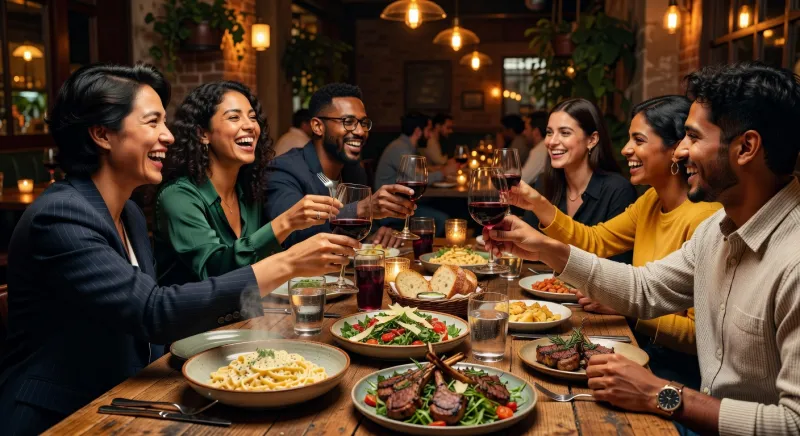
The communal seating common at many pop-ups — long tables, shared benches, guests who may not have known each other before the evening — also changes the social texture of the meal. Conversation moves more freely. People talk to the chefs. The formality that can make fine dining feel intimidating is largely absent, even when the food is technically ambitious.
There is also the element of discovery. Attending a pop-up dinner from a chef who doesn't yet have a permanent restaurant often means being among the first audiences to encounter a culinary voice before it reaches wider recognition. That experience — being early, being present for something still forming — is part of what drives the loyalty that pop-up audiences tend to feel toward the chefs they follow.
The Operational Realities Chefs Navigate
The freedom of the pop-up format comes with genuine operational complexity that is easy to underestimate from the outside. Without a permanent kitchen, chefs must either rent commissary space, negotiate access to an existing restaurant's kitchen during off-hours, or work within a host venue's equipment constraints. Menu planning has to account for what can realistically be produced in an unfamiliar environment.
Permitting and licensing requirements vary significantly by city and state. Some jurisdictions require temporary food service permits for pop-up events. Others have grey areas that chefs navigate carefully. The legal landscape around alcohol service at pop-up events is particularly variable and requires specific attention.
Front-of-house staffing for a pop-up is often assembled from a small, trusted team — sometimes fellow culinary professionals working in a different capacity for the night, sometimes the chef's own extended network. This informality can add to the event's warmth, but it also means that service consistency depends entirely on the team's improvisational competence.
These challenges are real, but they are also part of what makes a successful pop-up series an impressive professional achievement. Running a pop-up well demonstrates the full range of skills that restaurant ownership requires — not just cooking ability, but logistics, communication, financial planning, and the capacity to maintain quality under uncertain conditions.
Why the Pop-Up Dinner Format Endures
Pop-up dinners have outlasted their initial moment as a trend because they solve a genuine structural problem in how culinary creativity moves through the food world. The permanent restaurant, for all its virtues, is a slow and expensive vehicle for experimentation. The pop-up is fast, lean, and explicitly experimental — and the audience it attracts has consented to and welcomed that quality.
For chefs, the format offers a way to learn faster, reach audiences more directly, and take creative risks that the economics of permanent dining make difficult. For guests, it offers access to food that is genuinely unrepeatable and a relationship with the people cooking it that is more direct than most restaurant experiences allow.
That combination — creative freedom for the chef, genuine singularity for the guest — is not a marketing formula. It is a functional description of why the format works. Pop-up dinners persist because they do something that very few other dining formats can do: they make the act of cooking and the act of eating feel, for a few hours, like they are happening in the same room, for the same reasons, at the same time.