Walk into a classic American steakhouse and something almost ceremonial happens. The lighting drops. Dark wood panels absorb the noise of the city outside. A server in a white apron recites the cuts with the solemnity of a liturgy. The menu, printed in heavy type on card stock that could stop a bullet, lists no dish that requires explanation. You already know why you are here. The American steakhouse has been staging this particular theater for well over a century, and Americans keep showing up — not just hungry, but ready to participate in something that feels larger than a meal. Understanding American steakhouse history and dining culture means understanding why a room full of beef, bourbon, and candlelight still functions as the default setting for the most important meals of our lives.
The Chophouse: Where It All Began
The American steakhouse did not emerge fully formed. Its ancestor was the chophouse, a rough-hewn institution imported from Britain in the colonial era. Chophouses were democratic in the bluntest possible sense: they served working men, merchants, and laborers who needed a substantial meal and a place to conduct business away from home. The food was plain — chops, steaks, potatoes — and the atmosphere was built around efficiency rather than experience. You ate, you left, you got back to work.
What transformed this utilitarian model into something more resonant was the westward expansion of the United States and the cattle industry that followed it. By the mid-nineteenth century, massive cattle drives were moving herds from Texas to railheads in Kansas, and beef was becoming a defining feature of American identity. It was abundant, it was cheap relative to European proteins, and it carried a mythological weight — the open range, the cowboy, the frontier — that no other food quite matched. Beef was not merely sustenance. It was a statement about where this country thought it was going.

As an Amazon Associate, I earn from qualifying purchases.
As railroad networks connected cattle country to urban centers, the supply of beef into cities like Chicago, New York, and Kansas City became reliable enough to support a new kind of establishment: a restaurant built specifically around the theatrical preparation and consumption of a single, central ingredient.
The Gilded Age and the Birth of the Modern Steakhouse
The late nineteenth century produced the first steakhouses recognizable to a modern diner. These were not just places to eat beef — they were places to be seen eating it. Wealth, in the Gilded Age, was demonstrated through appetite as much as through dress or address, and a lavishly marbled porterhouse, properly prepared, was among the most legible symbols of prosperity available to an American man.
Peter Luger Steak House in Brooklyn, opened in 1887, is one of the oldest continuously operating steakhouses in the United States and holds a James Beard America's Classics award. That a restaurant founded in the same decade as the Eiffel Tower still draws long reservations lists and devoted regulars tells you something important: the steakhouse, once established, proved extraordinarily resistant to obsolescence. Peter Luger's longevity is not nostalgia tourism. It is evidence that the format solved something real about how Americans want to eat on important occasions.
Part of what made these early institutions work was their unambiguous personality. They did not hedge. They did not apologize for what they were. They served beef, they served it boldly, and they created an environment that signaled to the diner: this is a serious place for serious food. That clarity of identity, rare in any era of the restaurant business, turned out to be enormously durable.
The Mid-Century Golden Age: Ritual, Theater, and the Business Meal
If the Gilded Age built the steakhouse's bones, the mid-twentieth century gave it its soul. The postwar economic boom created a vast new class of corporate professionals who needed a venue for the business lunch and the celebratory dinner — occasions that required formality without the intimidating codes of traditional European fine dining. The steakhouse filled that gap perfectly.
The great midcentury steakhouses — in New York, Chicago, Los Angeles, and every city with a stock exchange and an expense account culture — developed a set of conventions that amounted to a shared liturgy. Dark booths offered privacy for negotiation. Martinis arrived without prompting. The menu was memorized rather than printed in some establishments, a subtle power move that rewarded regulars and gently humbled newcomers. Waiters, often long-tenured and protective of their sections, functioned less as service staff and more as custodians of the ritual.
The ritual of tableside preparation — including carving, flambéing, and sauce finishing — was a documented feature of mid-20th century American fine dining steakhouses, linking them to European service traditions like guéridon service. This borrowing from European technique was not accidental. It allowed the steakhouse to claim the prestige of continental dining while remaining emphatically, unapologetically American in its ingredients and spirit. You could have the performance of a French restaurant without the cultural submission it sometimes implied. The steak remained sovereign.
The Science Beneath the Spectacle: Dry-Aging and Craft
What elevated the best steakhouses above mere beef dispensaries was a genuine technical commitment that most diners sensed without fully understanding. The most important of these techniques was dry-aging.
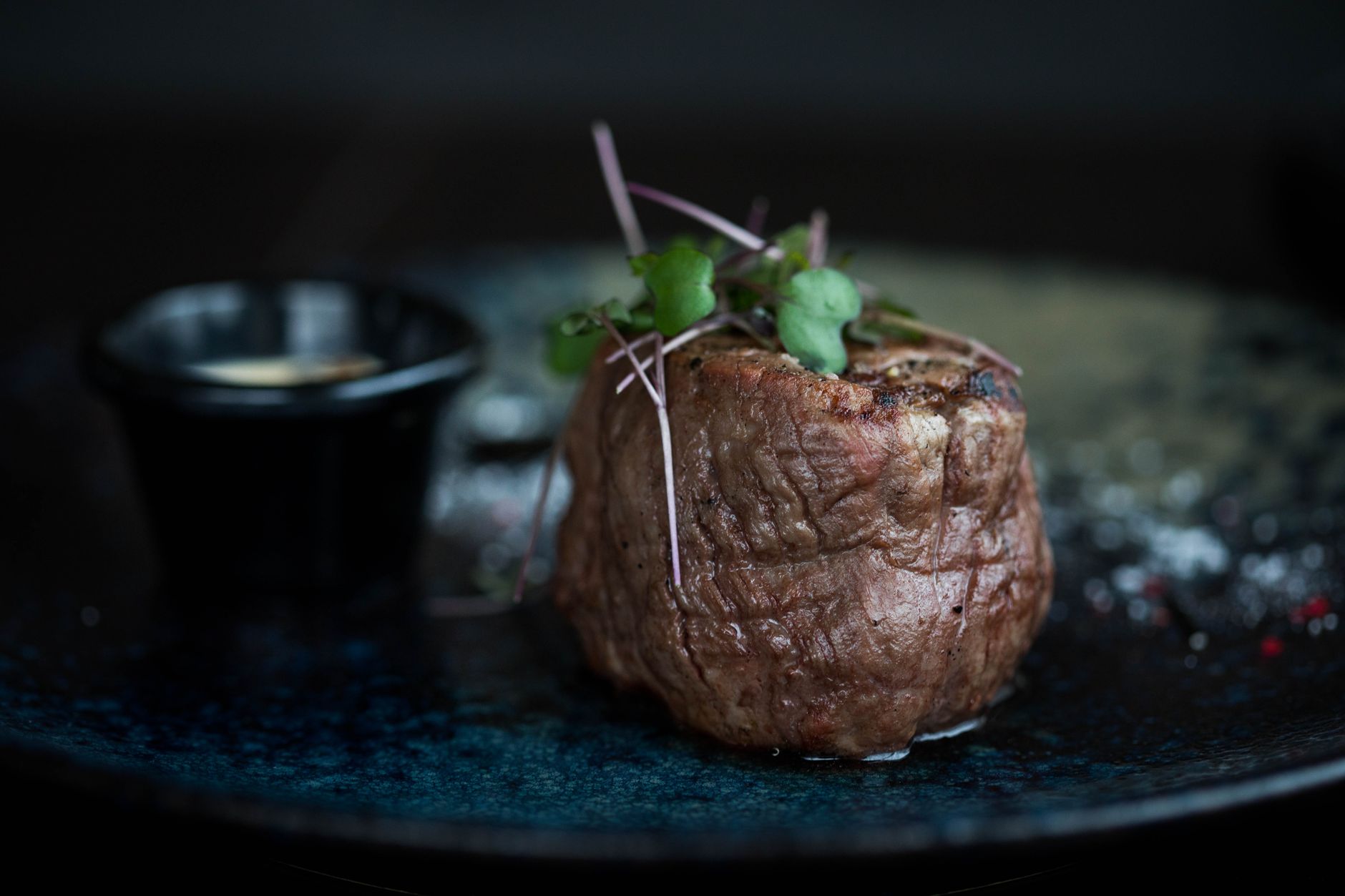
Dry-aging beef, a process in which cuts are stored in controlled environments for 21 to 45 days or longer, causes enzymatic breakdown of muscle fibers and moisture evaporation that concentrates flavor, a technique documented in food science literature. The result is beef that tastes more intensely of itself — nuttier, more complex, with a tenderness that wet-aged or fresh beef simply cannot replicate. It is also expensive and space-intensive, which is why most supermarket beef and chain restaurants skip it entirely.
For the serious steakhouse, the dry-aging room became a kind of reliquary — a physical proof of commitment, sometimes displayed behind glass for diners to observe. It communicated something essential: we take this seriously enough to wait. In a culture that increasingly prizes speed and convenience, that patience reads as luxury. The aging room is one of the reasons a great steakhouse steak costs what it costs, and one of the reasons it justifies the price.
The theatrical element of steakhouse service — the sizzling cast iron, the resting butter, the chef's tableside carve — is not mere showmanship layered over an otherwise ordinary product. In the best cases, it is an honest display of a real culinary tradition with genuine craft underpinning it.
Status, Celebration, and the Sociology of the Steakhouse
To understand why the American steakhouse persists, you have to grapple with what it actually does for the people who walk through its doors. It is not primarily about nutrition. It is about occasion-marking — the transformation of an ordinary evening into a memorable event through the medium of shared, expensive, sensory-intense food.
Birthdays, promotions, retirements, deal closings, anniversary dinners, pre-game meals before major sporting events: the steakhouse is the default venue for the moment Americans want to commemorate. This is not accidental. The format is purpose-built for significance. The weight of the menu, the formality of the service, the relative expense — these are all signals that say: this is not Tuesday night. This matters.
There is also an unmistakable dimension of status performance built into steakhouse culture. Ordering the biggest cut, knowing the menu well enough to ask for off-list modifications, being recognized by the staff — these are all small demonstrations of belonging and competence. The steakhouse rewards knowledge. Knowing the difference between a porterhouse and a T-bone, understanding doneness temperatures, being able to discuss marbling grades — these are modest but real forms of cultural capital in the American dining context.
Sociologists of food have noted that meat consumption has historically tracked with prosperity — in periods of economic expansion, beef consumption tends to rise, and vice versa. The steakhouse, as the most theatricalized form of meat consumption, functions as a kind of prosperity theater. Eating there is a way of enacting success, not just enjoying a meal.
Challenges and Reinvention: The Steakhouse in the Modern Era
The steakhouse has not sailed through the last few decades without turbulence. The rise of health consciousness in the 1980s and 1990s put red meat on the defensive. The growth of diverse culinary influences — the explosion of serious Italian, Japanese, and other international cuisines in American cities — gave diners more alternatives for a prestigious night out. Environmental concerns about beef production have added ethical complexity that earlier generations of steakhouse patrons never had to navigate.
The industry adapted, though not always elegantly. Chain steakhouses proliferated in the 1990s, offering a standardized, accessible version of the experience for suburban family dining. This democratization was commercially successful but diluted the mystique. A steakhouse that appears in every strip mall is a different psychological object than one that requires a reservation made weeks in advance in a city neighborhood with a history.
More interestingly, a generation of younger chefs began rethinking what a steakhouse could be — incorporating dry-aged programs that rival the old masters, pairing beef with sophisticated wine lists and vegetable-forward sides that reflect current cooking sensibilities, and designing spaces that feel contemporary without abandoning the atmosphere of occasion. The upscale modern steakhouse has absorbed the lessons of the farm-to-table movement without abandoning its carnivorous core.
The Japanese influence deserves particular mention. The arrival of Wagyu beef — hyper-marbled cattle raised to standards that produce a fundamentally different eating experience — gave the American steakhouse a new luxury tier to occupy. A slice of A5 Wagyu priced by the ounce represents the steakhouse format at its most extreme: maximum intensity, minimum volume, extraordinary expense. It has become the apex predator of the modern steakhouse menu.
What the Steakhouse Tells Us About American Identity
A cuisine is always a self-portrait. The foods a culture elevates, the rituals it builds around them, and the occasions it assigns to specific dishes all reveal what that culture values and how it understands itself. The persistence of the American steakhouse — through health scares, economic downturns, the proliferation of competing cuisines, and genuine ethical questioning about meat's environmental cost — suggests that it is doing something very deep for the people who patronize it.
Part of it is the mythology of abundance. America has long defined itself through scale — big landscapes, big ambitions, big portions. The steakhouse, with its two-pound porterhouses and its inexhaustible bread baskets and its shared sides designed for four people, is the material expression of that self-image. To eat abundantly is to feel, at least for an evening, that the frontier promise has been kept.
Part of it is the directness. In an era of increasingly conceptual, deconstructed, and narrativized restaurant food, the steakhouse offers radical clarity. You know what you are eating. You know why it is good. You need no interpreter. This legibility is not primitiveness — it is a design choice with enormous appeal, especially to diners fatigued by menus that require a briefing.
And part of it, honestly, is that a great steak is one of the most delicious things a kitchen can produce. The steakhouse's cultural power rests ultimately on a sensory foundation. Strip away the mythology, the status games, the ritual, and you are still left with the Maillard reaction, the mineral iron depth of aged beef, the contrast of crust and interior — pleasures that are entirely real, entirely earned, and entirely worth returning to.
The Enduring Architecture of Occasion
Every generation seems to discover, somewhat to its own surprise, that it wants a steakhouse. The format absorbs new contexts — the millennial expense-account dinner, the Gen Z celebration meal documented for social media, the multigenerational family gathering — without losing its essential character. It is one of the most self-consistent dining formats in American food culture, which is precisely why food critics occasionally dismiss it as reactionary and why ordinary diners keep filling its tables regardless.
The steakhouse is not going anywhere. It is too useful as a cultural technology, too pleasurable as a sensory experience, and too deeply embedded in the American story of prosperity, celebration, and appetite. What it offers is not just a meal but a legible ceremony for the moments that matter — a way of saying, without ambiguity, that something worth marking has occurred, and that we are marking it with the best thing we know how to cook.
That is, finally, what a cathedral does too. It gives form to occasions that resist ordinary language, and it does so through architecture, ritual, and accumulated history that no individual visit can fully exhaust. The parallel is not accidental. The American steakhouse has been building its institution for nearly a century and a half, and the congregation, by every available measure, is not thinning out.
Sources
Every factual claim in this article was independently verified against the following sources:
- What is Dry Aged Beef? — flannerybeef.com
- Peter Luger Steak House - Wikipedia — en.wikipedia.org
- Steak Diane — Grokipedia — grokipedia.com