There is a particular kind of hunger that no restaurant reservation can satisfy. It hits somewhere on a two-lane highway in the Mississippi Delta, or outside a crab shack on the Chesapeake, or at a tamale stand in the Rio Grande Valley — the recognition that the most honest food in America has almost always lived just off the main road, answering to a landscape and a community rather than to any critic's list. The culinary road trip is, in many ways, the most distinctly American form of food travel, and understanding what makes it work means letting go of the idea that the best meal is necessarily the most celebrated one.
What Makes a Culinary Road Trip Different
Traveling specifically to eat is nothing new. Food pilgrims have crossed continents for centuries to taste a particular wine, cheese, or preparation at its source. But the American version of this tradition carries its own specific logic. The country is vast, its regional cuisines are genuinely distinct from one another, and — critically — many of the most important culinary traditions here are tied not to formal restaurants but to informal ones: the barbecue pit that opens at noon and closes when the meat runs out, the roadside boiled peanut stand in Georgia, the biscuit counter that has operated out of the same building in rural Tennessee for three generations.
A guidebook ranking can point you toward a celebrated chef's tasting menu. It is far less useful for finding the tamale lady whose truck appears every Saturday morning in a specific parking lot in San Antonio, or the Vietnamese sandwich shop that a refugee family opened in a New Orleans strip mall and that now defines a neighborhood's lunch hour. These places resist categorization not because they are hidden, but because their value is rooted in context — in the land, the people, and the story behind the food — rather than in technique alone.

As an Amazon Associate, I earn from qualifying purchases.
The Landscape as Ingredient
One of the foundational pleasures of eating your way through a specific American region is the way food becomes a kind of map. In the low country of South Carolina, rice — cultivated there for centuries — still anchors the table in ways that feel genuinely different from the rice dishes of any other American cuisine. Along the Gulf Coast, the proximity of the shrimping fleet means that what appears on a styrofoam plate at a roadside seafood counter in the morning was likely in the water the previous night. In the apple country of upstate New York or the Shenandoah Valley, farm stands in autumn don't just sell fruit; they sell the particular sweetness of a specific variety grown in a specific soil.
This relationship between place and plate is what food writers often call terroir — a term borrowed from wine — but it applies equally well to a jar of sourwood honey from the Appalachian foothills or a bag of Hatch green chiles from a New Mexico roadside roaster. The ingredient carries its geography with it. Culinary origins matter here in a way that goes beyond the academic: tasting food close to its source changes both the flavor and the understanding of what you're eating.
The Regions Worth Driving Through
The American South
No region in America has a more complex and layered food culture than the South, and no region rewards slow driving more richly. The barbecue traditions alone — whole hog in eastern North Carolina, ribs and shoulders in Memphis, brisket in central Texas, mutton in western Kentucky — are so distinct from one another that a single road trip can feel like a tour through entirely separate culinary civilizations. Add the Low Country, the Delta, the Appalachian highlands, and the Gulf Coast, and you have enough material for a lifetime of purposeful eating.
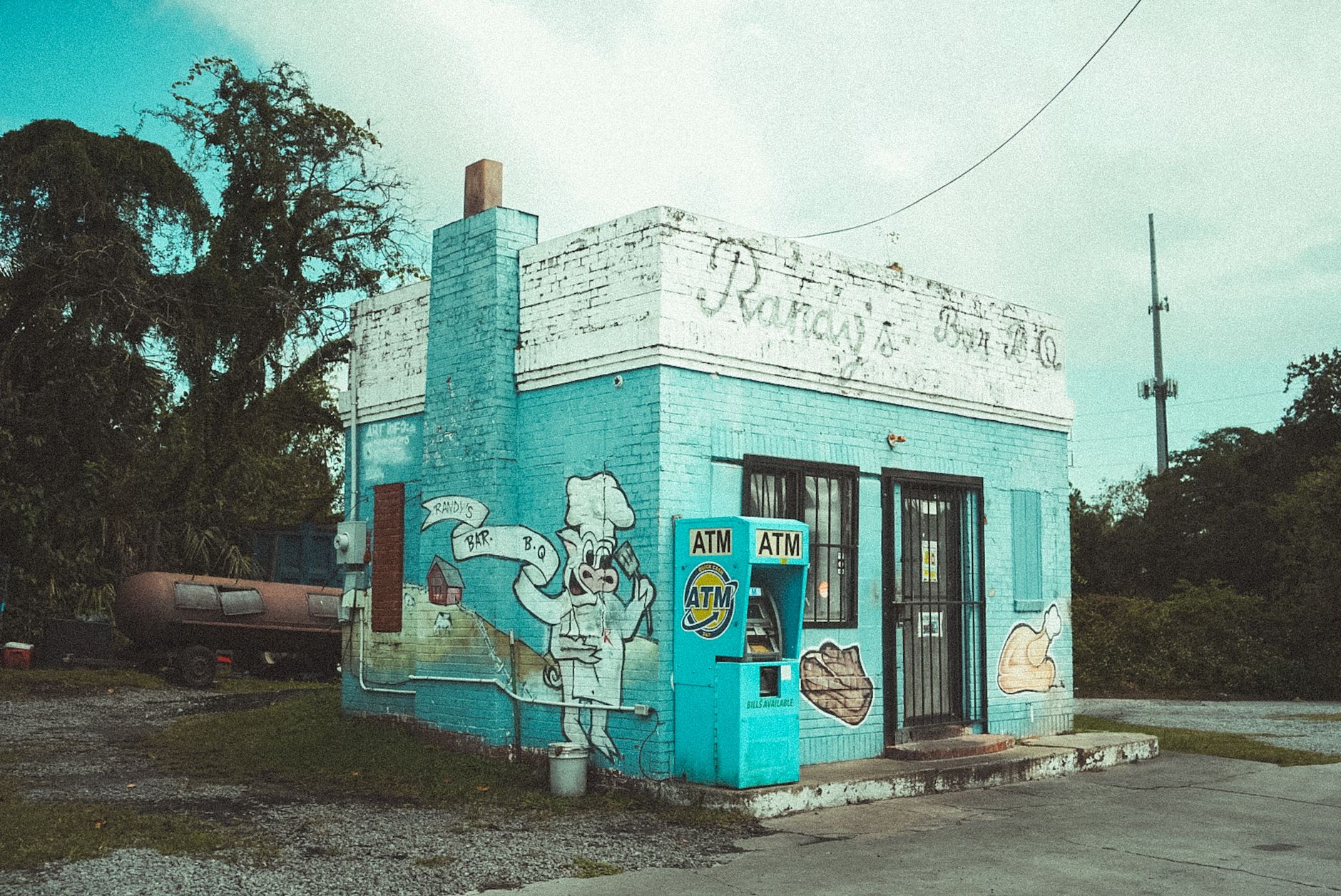
The key is slowing down. The legendary pits of the Carolinas and Alabama are rarely on major highways. They are on the roads that connect small towns, and they often lack signage beyond a hand-painted board and a column of smoke. Showing up at opening time — or before it — is a form of respect that tends to be rewarded.
As an Amazon Associate, we earn from qualifying purchases.
The Gulf Coast and Louisiana
Louisiana cooking, particularly in and around New Orleans and the Cajun parishes to the west, is one of the most developed regional cuisines in the country. But the roadside version of it — cracklins from a gas station in Breaux Bridge, boudin from a butcher shop in Opelousas, boiled crawfish from a seafood trailer parked near the Interstate during crawfish season — is something that no formal restaurant can fully replicate. The informality is not incidental. It is structural. These foods were designed to be eaten standing up, or in a car, or at a folding table with strangers.
The Southwest and the Texas Border
The food cultures of the Texas-Mexico border, New Mexico, and the broader Southwest are among the most misunderstood in American culinary life, largely because what most people know of them is the diluted version served elsewhere. A culinary road trip through this region — stopping at family-run Mexican restaurants in El Paso, at roadside chile stands in Hatch, at taco trucks in San Antonio's West Side — reveals a cuisine of genuine depth, rooted in centuries of Indigenous, Spanish, and Mexican food traditions that have no real equivalent anywhere else in the country.
New England and the Northeast
The seafood shack is a specific American institution, and nowhere does it appear in more concentrated form than along the New England coast. The lobster roll — served either warm with butter in Maine style or cold with mayonnaise in Connecticut style — is one of those regional disputes that sounds trivial until you've eaten both versions near their points of origin, and realized that each one is actually arguing for a completely different philosophy of what the sandwich should be. The clam shacks of Cape Cod, the oyster bars of the Connecticut shore, the fish chowder of coastal Maine: these are not quaint. They are the product of a specific maritime culture that has been feeding people seriously for a very long time.
How to Actually Plan One
The best culinary road trips are loosely structured. Pick a region and a rough route — a single state, a river corridor, a stretch of coastline — and identify the anchoring stops in advance: the places that are genuinely irreplaceable and require timing (early hours, limited days of operation, seasonal menus). Then leave the rest of the itinerary open.
Talk to people at each stop. Ask the person behind the counter where they eat on their day off. Ask at the gas station. Ask the farmer at the roadside stand. Local knowledge about food is almost always more reliable than any app, and the willingness to ask is often what separates the traveler who finds the remarkable from the one who eats decently and goes home thinking they've covered the territory.
Pay attention to what is in season. A culinary road trip through the Georgia coast in early summer means soft-shell crabs. In the orchards of eastern Washington in September, it means the specific apples that never make it to supermarkets. Aligning your route with the calendar transforms a good trip into an extraordinary one.
The Places That Don't Photograph Well
There is an honest tension in contemporary food travel between the desire to find genuinely authentic, community-rooted food and the social media infrastructure that has made it harder for such places to stay that way. The barbecue pits, tamale stands, and diners that define American roadside food culture were not built for visibility. They were built for the people who live nearby. The respectful road-trip eater comes as a guest, not as a content opportunity — orders generously, eats without performing, tips well, and leaves the place as they found it.
This is not a small point. The best culinary road trips in America are possible in part because these institutions have survived by serving their communities, not by catering to tourists. Treating them accordingly is both good manners and good strategy: the places that feel like discoveries are almost always the ones that have not yet been loved to death by attention.
What You Bring Home
The lasting value of a culinary road trip is not the list of places visited or the photographs of plates. It is the understanding of how American food actually works — how it is tied to specific landscapes, to specific histories of migration and agriculture and necessity, to the ingenuity of people cooking with what they had. A meal at a great roadside institution doesn't just taste good. It explains something. About a place, about a people, about the country at large.
No ranking captures that. Rankings are useful for finding the technically accomplished. The road is better for finding the true.