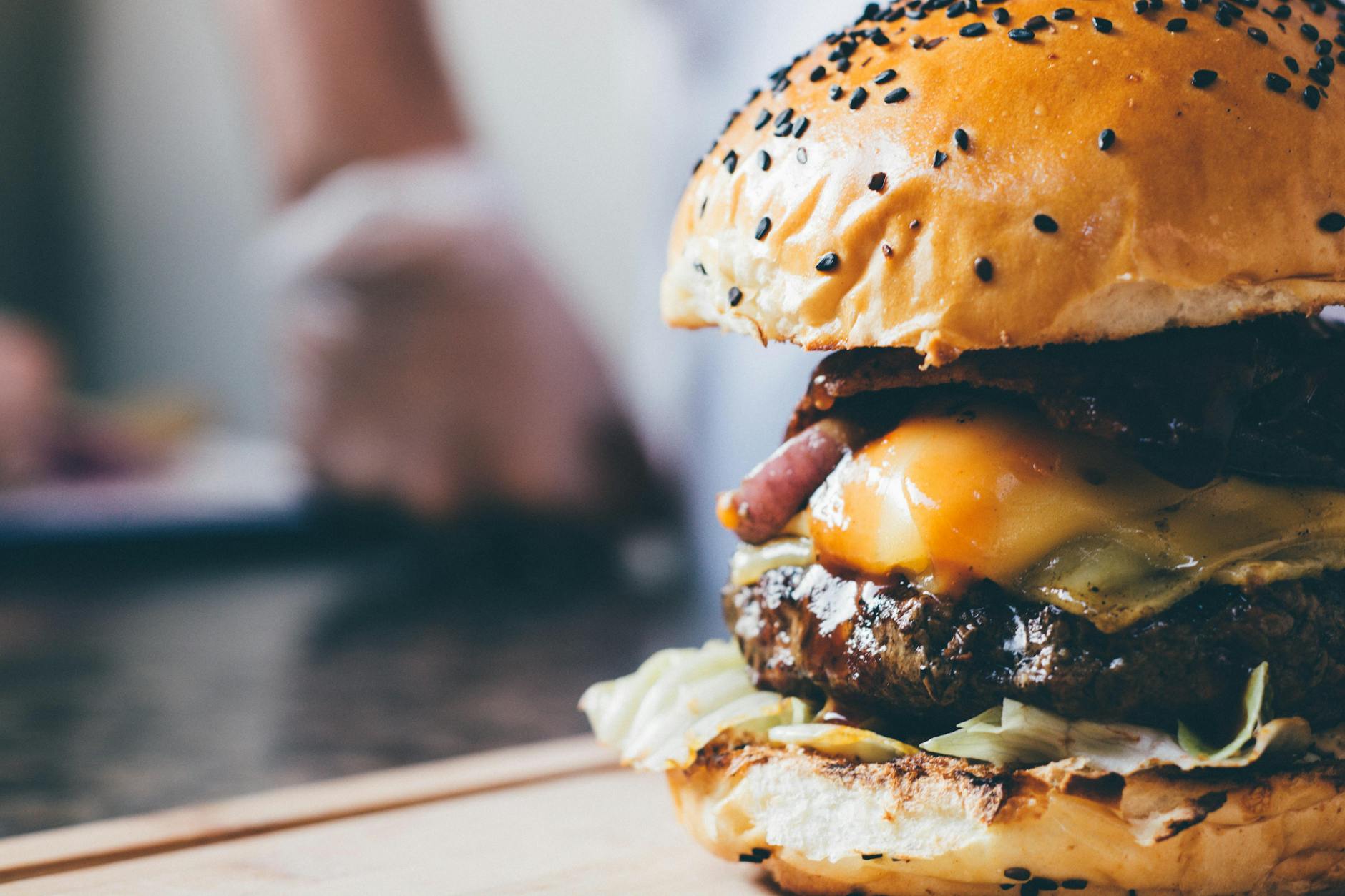
At first glance, a smash burger is disarmingly simple: a loose ball of ground beef, dropped onto a ripping-hot flat griddle, pressed hard with a spatula, and left alone long enough to develop a browned, lacey, almost crispy crust. Thirty seconds of contact, a flip, a slice of American cheese, and you're done. But spend any time watching independent chefs across the country build their identities around this technique, and you start to realize that the smash burger has become one of the most culturally loaded objects in American food right now — a vehicle for questions about where we came from, what we remember, and what "serious" cooking actually means.
A Technique With Deep Roots
The instinct to smash a burger flat on a hot surface is not new. Food historians trace the thin griddle-smashed patty to the Midwest and Southeast, particularly to regional chains like Steak 'n Shake, founded in 1934 in Normal, Illinois, which built its identity around thin, fast-cooked flat burgers. These weren't accidents of laziness — they were deliberate choices rooted in the economics and rhythms of diner culture, where speed and consistency mattered as much as flavor.
The griddle itself was the key tool. Unlike a grill with open flames, a flat iron griddle retains heat evenly and creates direct, uninterrupted contact between meat and metal. That contact is everything. The smash burger technique — pressing a loose beef ball hard onto a screaming-hot flat griddle — relies on the Maillard reaction to create a browned, lacey crust that a thicker patty cannot achieve at the same speed. The Maillard reaction, the chemical browning process responsible for crust development in smash burgers, occurs above approximately 280°F (140°C) and produces hundreds of distinct flavor compounds. A thick patty insulates itself — by the time the center is cooked, the exterior has dried out or the griddle temperature has dropped. The smashed patty, thin and wide, maximizes surface area and keeps that crust-to-interior ratio high throughout.

As an Amazon Associate, I earn from qualifying purchases.
Diner cooks understood this intuitively long before anyone named the technique. What's changed is the context in which it's being applied.
How a Fast-Casual Chain Brought It Into the Mainstream
Smashburger, the fast-casual chain that helped popularize the technique nationally, was founded in Denver, Colorado in 2007. Its arrival coincided with a broader cultural moment: Americans were becoming more interested in the provenance and craft of everyday food, and the fast casual segment was positioning itself as the intelligent middle ground between fast food and sit-down restaurants. Smashburger gave the technique a name, a brand, and a national footprint — which, paradoxically, also made it available for independent chefs to reclaim, reinterpret, and push further.
By the mid-2010s, the smash burger had escaped the chain context entirely. Small burger counters, pop-ups, and food stalls began treating it not as a corporate format but as a culinary starting point — a blank canvas with a very specific, very satisfying texture profile that diners already half-remembered from childhood road trips and late-night diner runs.
Nostalgia as Raw Material
There's a reason nostalgia keeps appearing in conversations about smash burgers. The format carries an almost involuntary emotional charge for American diners. The thin patty, the soft potato bun, the melted cheese with slightly crisped edges — these are sensory memories more than considered preferences. Independent chefs have been smart enough to recognize that working with nostalgia, rather than against it, gives them a head start on emotional connection.
As an Amazon Associate, we earn from qualifying purchases.
But nostalgia alone doesn't make something interesting. What the best smash burger makers have done is treat that nostalgic framework as a structure — reliable, familiar, instantly legible — and then fill it with flavors and references that are anything but generic. The format stays recognizable. The content becomes personal, regional, cultural.
Regional Identity on a Flat Griddle
Across the United States, chefs are using the smash burger to tell stories about place. In the South, that might mean pimento cheese instead of American, or a smear of comeback sauce and a shard of bread-and-butter pickle. In the Southwest, green chile — the kind roasted in autumn in New Mexico parking lots — makes an appearance as a topping that locals recognize immediately and visitors find transformative. In the Pacific Northwest, Walla Walla onions, caramelized on the same griddle as the patty, turn up alongside local farmstead cheeses.
These aren't gimmicks. They're a form of culinary origins storytelling — using a universally understood format to make a specific argument about where a chef grew up, what their pantry looks like, and what they think deserves to be taken seriously. The smash burger is legible enough that even an adventurous topping doesn't alienate the diner. They already trust the format. The chef earns the right to surprise them.
Immigrant Flavors and the Question of Authenticity
Perhaps the most intellectually rich territory in the current smash burger moment is what happens when immigrant chefs and first-generation Americans bring their own flavor frameworks to the format. This is where the tension between the burger's all-American identity and the genuinely multicultural reality of American cooking becomes most visible — and most productive.
Korean-American cooks have layered gochujang-spiked mayo, kimchi, and sesame-toasted buns onto smash patties, creating something that reads as both completely American and deeply Korean at once. Vietnamese-American chefs have applied the logic of bánh mì — pickled daikon, cilantro, jalapeño, liver pâté — to the smash burger format, producing a version that is neither a bánh mì nor a conventional burger but something new that references both. Mexican-American cooks have folded in flavors from their own heritage — chipotle crema, cotija, avocado thinned to a sauce rather than piled as a thick slab — that make the burger feel less like fusion and more like a natural expression of a bicultural kitchen.
What makes these applications feel genuine rather than appropriative is usually authorship: the chef is drawing from their own lived experience, not raiding someone else's pantry for novelty. The smash burger's structural simplicity means there's no elaborate technique to master before you can make it your own. The griddle is democratic that way.
The Tension Between Fast Food and Serious Craft
There's an ongoing, sometimes uncomfortable conversation in professional kitchens about whether burgers — smashed or otherwise — belong in the realm of serious culinary craft. For a long time, fine dining kept its distance from the format. A burger on a tasting menu was either ironic or a concession to accessibility. The smash burger complicated that dismissal by being genuinely difficult to execute well at volume while also being technically interesting at the chemistry level.
Getting a smash burger right requires precise heat management, the correct fat content in the beef (higher fat tolerates the smash better and produces a lacier crust), timing that allows the crust to release naturally rather than being torn from the griddle, and a bun that can absorb grease and steam without collapsing. None of that is trivial. And when the sourcing conversation enters — grass-fed versus grain-finished, dry-aged trim versus fresh grind, bespoke bun formulas from local bakers — the smash burger starts to look less like a departure from serious cooking and more like an extension of it.
Some chefs have leaned into this tension deliberately, serving smash burgers as part of a wider menu that includes elaborate vegetable preparations or charcuterie, forcing the diner to confront their own assumptions about what merits attention. The burger doesn't apologize for being a burger. It just asks to be judged by the same standards as everything else on the pass.
Why the Format Keeps Expanding
The smash burger's continued relevance — well past the point where trend pieces declared it oversaturated — comes down to a few structural advantages. It's fast, which makes it viable for high-volume independent spots and food trucks operating without full kitchen infrastructure. It's visually dramatic, with the crust and cheese pull translating well to the kind of short-form video content that drives discovery for new restaurant openings. And it's forgiving enough in its flavor architecture that it can absorb an enormous range of cultural references without losing coherence.
But underneath all of that is something more durable: the smash burger is genuinely delicious in a way that satisfies something primal. The Maillard crust delivers depth of flavor that a steamed or thick-patty burger often can't match. The thin profile means every bite contains all the components simultaneously — bun, crust, cheese, condiment — rather than the architectural problem of a towering burger that falls apart on contact.
Diners aren't wrong to keep ordering them. And chefs aren't wrong to keep finding new things to say through them.
What It Actually Reveals About American Food Culture
The smash burger's rise tells us something true about where American dining culture is right now. Diners are simultaneously nostalgic and curious — they want the comfort of a familiar format and the stimulation of an unfamiliar flavor. They're more willing than previous generations to trust a counter-service spot or a food truck with a genuinely ambitious culinary idea, as long as the food is honest about what it is. And they're increasingly receptive to the idea that the most interesting American cooking isn't happening only in fine dining rooms but in the spaces where immigrant kitchens, regional traditions, and diner-counter practicality intersect.
The smash burger sits exactly at that intersection. It's a technique old enough to carry genuine historical weight, simple enough to be reinvented without losing its identity, and American enough — in the complicated, contested, genuinely plural sense of that word — to keep generating new meanings for as long as chefs have something worth saying.
Which, right now, appears to be a long time.
Sources
Every factual claim in this article was independently verified against the following sources:
- The Ultimate Smash Cheeseburger Recipe — seriouseats.com
- What is the Maillard Reaction — scienceofcooking.com
- Smashburger® Ushers in a New Era with Brand Transformation and Enhanced Menu Launch — prnewswire.com
- Steak N Shake | McLean County Museum of History — mchistory.org