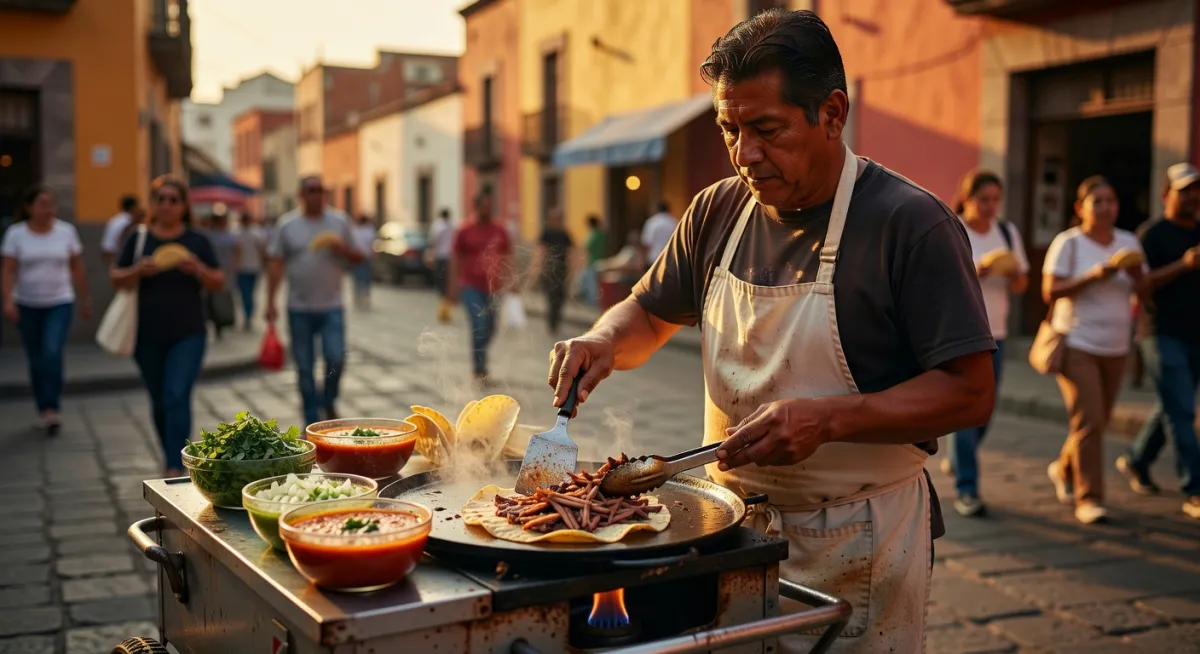
Ask for Mexican food in Santa Fe and a local might gently correct you. What you're eating isn't Mexican food — not exactly. It isn't Tex-Mex, and it bears only a passing resemblance to the California-style burritos that most Americans picture when they think of southwestern cooking. New Mexico cuisine is something older, stranger, and more layered than any of those categories can contain. It is, in fact, one of the oldest continuously practiced regional food cultures in the United States, and understanding it requires stepping back several centuries before a single taco truck ever appeared on the scene.
A City Old Enough to Have Its Own Culinary Tradition
The story of Santa Fe's food begins with the land and the people who cultivated it long before European contact. The Pueblo peoples of the Rio Grande valley — ancestors of today's Pueblo communities including the Tiwa, Tewa, Towa, Keres, and Zuni — developed a sophisticated agricultural system centered on the "three sisters": corn, beans, and squash. These weren't just staple crops; they were the structural pillars of an entire culinary worldview. Corn was dried, nixtamalized (soaked in an alkaline solution to unlock its nutrients), ground into meal, and transformed into dishes that persist to this day. Chile, though it arrived in the northern pueblos through trade with Mesoamerican cultures to the south, became so thoroughly adopted that New Mexico eventually developed its own distinct varieties.
Spanish colonizers formally established Santa Fe as a colonial capital in 1610, making it one of the oldest continuously occupied European-founded cities in North America, with a food culture that fused Spanish and Indigenous ingredients over centuries. That date matters more than it might first appear. By 1610, the culinary exchange between Spanish settlers and Pueblo communities was already underway — not as a sudden collision, but as a gradual, sometimes violent, sometimes cooperative layering of traditions. The Spanish brought pork, beef, sheep, lard, wheat, onions, garlic, and stone-fruit orchards. The Pueblo people contributed corn varieties, squash, beans, and chile cultivation techniques the Spanish had never encountered. What emerged over the following four centuries was neither purely Indigenous nor purely Iberian. It was something genuinely new.
The Chile Question: Why New Mexico's Is Different
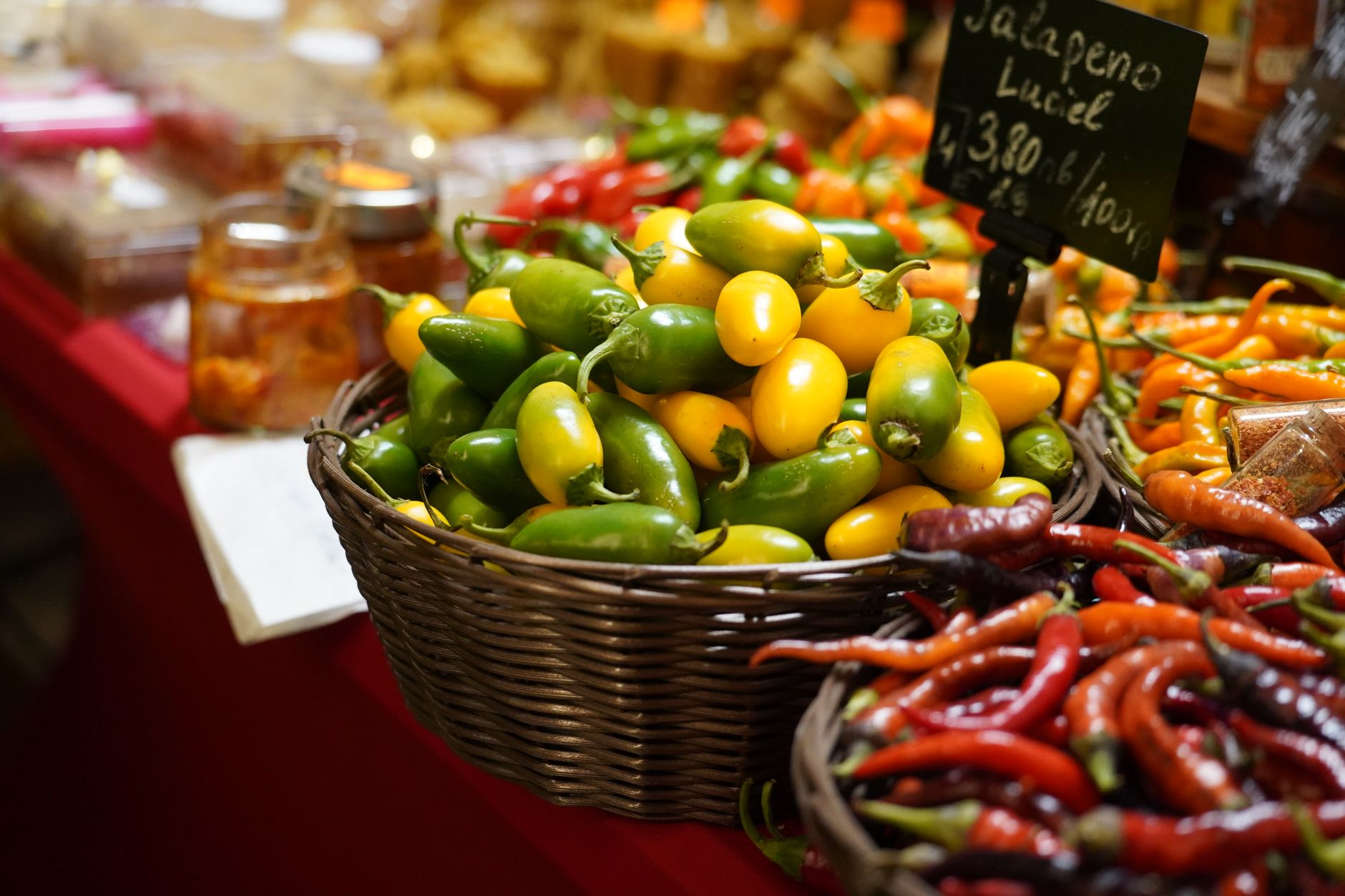
If you want to understand New Mexico cuisine, you have to understand its relationship with chile — not chili, the Texan beef stew, and not the generic red pepper flakes you find in a pizza parlor. New Mexico chile refers to specific varieties, particularly those grown in the southern part of the state, that have been cultivated and selected over generations to produce a flavor profile unlike anything grown elsewhere. The Hatch Valley, a stretch of the Rio Grande floodplain in southern New Mexico, produces chiles with a distinctive earthiness, moderate heat, and a depth that roasting transforms into something almost smoky and sweet simultaneously.
The Hatch Chile Festival, held annually in Hatch, New Mexico since 1971, draws tens of thousands of visitors and marks the late-summer harvest that defines the New Mexican culinary calendar. But the festival is really just a public celebration of something that happens in kitchens and driveways across the state every August and September: the roasting of fresh green chiles in wire cages over open flames, then peeling, freezing, and storing enough to last through winter. This is not a tourist activity. It is a seasonal ritual with genuine cultural weight, as embedded in New Mexico life as the grape harvest is in wine country.
The "red or green?" question — the state's unofficial motto, and its official state question since 1999 — refers to which chile sauce you want on your food. Red chile sauce is made from dried, ripened pods rehydrated and ground into a deep, complex sauce with earthy and sometimes fruity undertones. Green chile sauce is made from roasted fresh or frozen green chiles, blended or chopped into a sauce that is brighter, grassier, and often more immediately peppery. The two are not interchangeable, and choosing between them (or answering "Christmas," meaning both) is one of the first decisions any diner makes. The fact that this choice is baked into the culture at the level of a state motto tells you something about how central chile is to New Mexican identity.

What Makes It Fundamentally Different from Tex-Mex
Tex-Mex emerged primarily from the borderlands of Texas and northern Mexico in the late 19th and early 20th centuries, shaped by the foodways of norteño Mexican immigrants and their interactions with Anglo-American tastes. It features yellow cheese melted heavily over dishes, cumin-forward spicing, flour tortillas, beef-centric fillings, and salsas built around tomato. These are genuinely delicious flavors, but they are flavors assembled from a different set of historical and geographical ingredients.
New Mexico cuisine predates Tex-Mex by centuries. Its corn tortillas are made from regional masa. Its sauces are built on dried or fresh New Mexico chiles, not jalapeños or chipotles. Cheese, when it appears, is often white — a crumbly queso blanco or a melted Monterey Jack rather than processed yellow cheddar. Pork features prominently in ways that reflect both Spanish colonial ranching and Indigenous meat-preservation traditions. And the dishes themselves — enchiladas stacked flat rather than rolled, sopapillas served as bread alongside a meal rather than as dessert, posole eaten as a year-round staple rather than a novelty — follow logic that developed independently of what was happening in Texas or California.
As an Amazon Associate, we earn from qualifying purchases.
California's mission-era Mexican food tradition, which evolved into the California-Mexican and eventually the Californian burrito styles, drew from different regional Mexican influences, particularly those of Sonora and Baja California. The giant flour tortilla burrito stuffed with rice, sour cream, and guacamole is an artifact of that particular history. It has essentially no presence in traditional Santa Fe cooking.
The Living Presence of Indigenous Tradition
One of the things that most distinguishes New Mexico cuisine from other American regional food cultures is how visibly and actively Indigenous Pueblo traditions remain part of everyday eating. This is not nostalgia or heritage tourism. Pueblo communities remain sovereign nations with their own governance, land, and food practices, and their culinary traditions have never been fully subsumed or replaced. They continue to evolve on their own terms.
Posole, a hominy stew with pre-Columbian Mesoamerican roots, remains a ritual dish in New Mexico served at ceremonial occasions and holidays, illustrating the living continuity of Indigenous food traditions in the regional cuisine. Hominy — dried corn kernels treated with an alkali process called nixtamalization — is the defining ingredient. It gives posole its distinctive chewy, earthy texture and a corn flavor that is more complex and less sweet than fresh corn. In New Mexico, posole appears at Christmas, at feast days, at weddings and funerals. It is comfort food with deep ceremonial meaning, and its presence on a restaurant menu in Santa Fe is not a marketing decision about cultural authenticity — it is simply what people have been eating for a very long time.
Blue corn also appears throughout New Mexico cuisine in ways that reflect its Indigenous origins. Blue corn atole (a warm, thin porridge), blue corn tortillas, and blue corn pancakes are made from varieties of corn developed by Pueblo farmers over many generations. The color is not decoration — it indicates a chemically distinct variety with a nuttier, slightly more mineral flavor than yellow or white corn. Using blue corn is, in this context, an act of culinary preservation as much as a flavor choice.
The Spanish Colonial Layer
The Spanish contribution to New Mexico cuisine is equally irreducible. Four centuries of Spanish and later Mexican governance left behind not just ingredients but techniques, rhythms, and dish types that have no equivalent in other American regional food traditions. Carne adovada — pork marinated for days in red chile, garlic, and oregano, then slow-cooked until falling apart — is one of the definitive dishes of the cuisine, and it reflects both the Spanish tradition of pork ranching and the Indigenous chile agriculture that gave the marinade its character.
Sopapillas deserve particular attention because they are so frequently misunderstood by visitors. In most of the country, if sopapillas appear at all, they are served as a dessert — puffed fried dough dusted with cinnamon sugar and drizzled with honey. In New Mexico, they are bread. They arrive at the table alongside your enchiladas or posole, and you tear them open and drizzle local honey inside, eating them as you would a dinner roll. The same dough that produces a New Mexican sopapilla can be traced back to Spanish wheat-flour frying traditions filtered through centuries of local adaptation. The function it serves — as an everyday bread rather than a sweet finish — is distinctly regional.
Bizcochitos, New Mexico's official state cookie, are a direct descendant of Spanish colonial baking, flavored with anise and lard and cut into fleur-de-lis shapes or other traditional forms. They appear at Christmas and other celebrations, another thread in the continuous fabric connecting today's New Mexico kitchens to a 17th-century colonial heritage.
Misunderstood by the Rest of America
Part of the reason New Mexico cuisine remains misunderstood is geographic. New Mexico sits between Texas and Arizona, and most Americans who have encountered southwestern food have done so in contexts shaped by Tex-Mex or Arizona-style Mexican food. When national restaurant chains attempt New Mexican dishes, they typically substitute Anaheim peppers or jalapeños for genuine New Mexico chiles, which fundamentally changes the flavor. The result tastes broadly "southwestern" but lacks the specific character that makes the cuisine what it is.
Another source of confusion is the word "Mexican." New Mexico was, of course, part of Mexico before the Mexican-American War and the Treaty of Guadalupe Hidalgo in 1848. Its food traditions were shaped by centuries of Mexican governance layered on top of Spanish colonial administration layered on top of Indigenous Pueblo practices. But the regional food of northern New Mexico does not reflect the cooking of central or southern Mexico — the regions whose cuisines most Americans are more familiar with through immigration patterns and restaurant culture. Calling New Mexico cuisine "Mexican food" is a bit like calling Scottish cooking "European food": technically not wrong, but missing everything that makes it specific.
New Mexicans themselves tend to be emphatic on this point. The pride residents take in their regional food culture is not casual. It is grounded in a genuine sense that something historically significant and culinarily irreplaceable is at stake — a tradition that survived Spanish colonization, the Pueblo Revolt of 1680, Mexican independence, American annexation, and the homogenizing pressures of 20th-century food culture, and that continues to be practiced and passed down today.
Why It Matters Beyond New Mexico
For anyone interested in American food history, New Mexico cuisine offers something rare: an unbroken chain of culinary practice that runs from pre-Columbian agriculture through colonial exchange to the present day. Most American regional food cultures emerged in the 18th or 19th centuries from immigrant populations. New Mexico's food culture has roots that are genuinely ancient by American standards, and it has maintained those roots while evolving.
Understanding it requires letting go of the categories most Americans use to organize southwestern food. It isn't a variation on Tex-Mex. It isn't a purer form of Mexican food. It is its own thing, shaped by a specific geography (high desert, at elevation, with access to the Rio Grande), a specific agricultural history (Pueblo corn and chile cultivation, Spanish livestock and orchards), and four centuries of cultural exchange that was often contentious but produced a food culture of genuine depth and specificity.
The next time you sit down in a Santa Fe restaurant and someone asks whether you want red or green, you're not just being asked about sauce. You're being invited into a culinary conversation that has been going on, in various forms, for longer than the United States has existed.
Sources
Every factual claim in this article was independently verified against the following sources:
- Santa Fe de Nuevo México (Spanish Colony) History | History Atlas — historyatlas.com
- Hatch Chile Festival — hatchchilefestival.com
- Why New Mexican Posole Is a Holiday Tradition — tomasitas.com