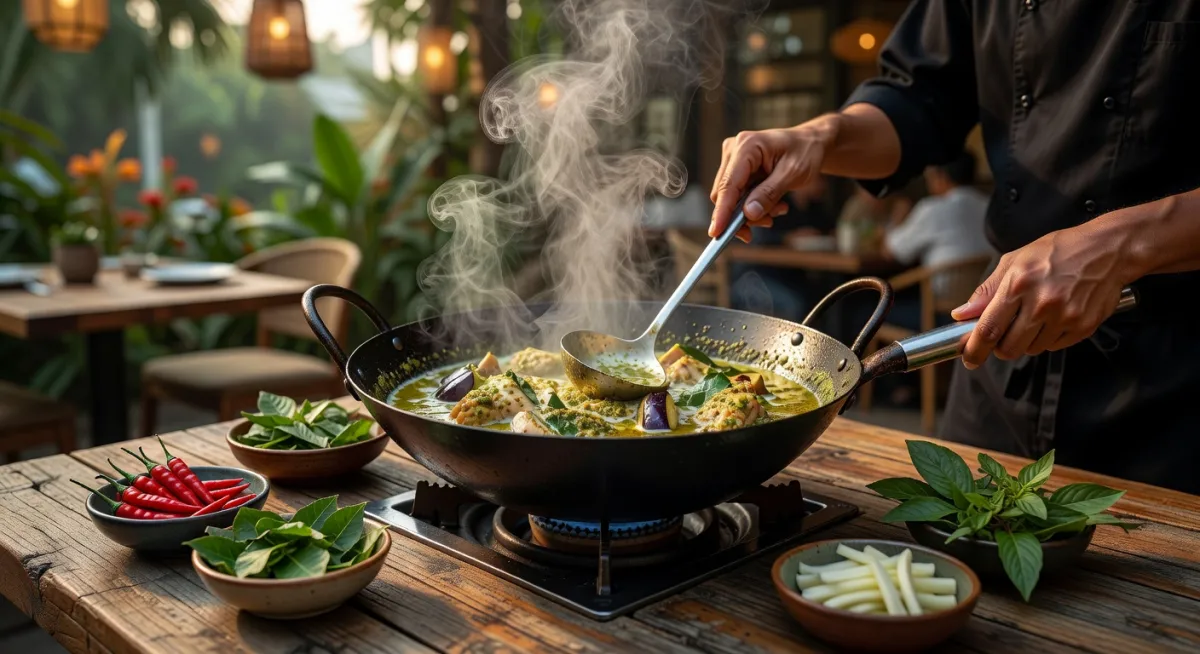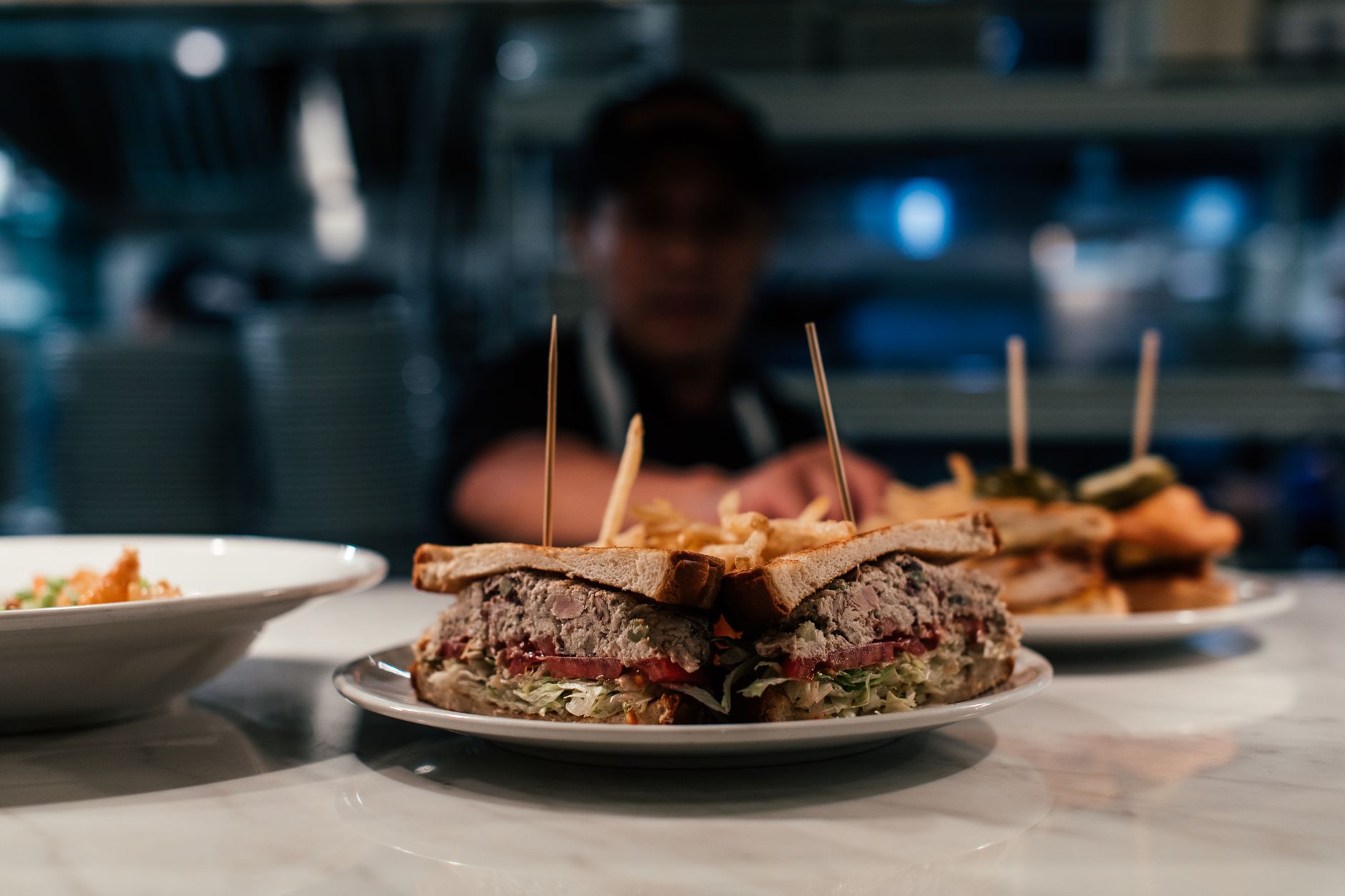
There are perhaps eight seats. They face a marble counter. Beyond it, two cooks move with the focused economy of surgeons. Within minutes of sitting down, one of them makes eye contact with you, places something small and precise on the counter, and explains — briefly, without fanfare — exactly what it is and why they made it tonight. You are not a table number. You are, for the next two or three hours, a participant. This is the chef's counter dining experience, and it has quietly reshaped what Americans expect from a serious meal out.
What Exactly Is a Chef's Counter?
The chef's counter — sometimes called a kitchen counter, chef's table at the pass, or simply "the counter" — is a small number of seats positioned directly at the boundary between dining room and kitchen. Unlike the traditional chef's table, which historically meant a single reserved table tucked inside the kitchen as a favor to VIP guests, the chef's counter is a deliberate architectural feature. It is designed so that the kitchen itself becomes the view, the entertainment, and in a real sense, the conversation partner.
The format varies. Some counters seat as few as four; others accommodate a dozen. Some restaurants build their entire identity around the counter, with no conventional tables at all. Others offer it as one section among many. But the defining characteristic is proximity and exposure: you can see the cooks, the cooks can see you, and the barrier between production and consumption is dissolved almost entirely.
Where the Idea Comes From
To understand the chef's counter, you have to understand its most important ancestor. Omakase-style dining, originating in Japanese sushi culture, is a direct antecedent to the American chef's counter format, with the term 'omakase' meaning roughly 'I leave it up to you' — surrendering menu choice to the chef. Seated at a sushi bar in Tokyo or Osaka, a diner faces the itamae — the chef — across a low wooden counter. The chef reads the diner's reactions, adjusts pacing, selects fish according to what is best that day. The meal is not a fixed script; it is a responsive dialogue. The diner's role is attentive trust, not passive order-placing.
That model traveled. As American chefs trained in Japan and as Japanese restaurants opened across major U.S. cities, the counter format became recognized not as an exotic novelty but as a genuinely superior way to experience food at its most intentional. By the 2000s and accelerating through the 2010s, ambitious American chefs began building their own versions — sometimes within restaurants already serving conventional tables, sometimes as the entire premise of a new project.
Why It Works: The Psychology of the Counter
Removing the Menu as Barrier
At most restaurants, the menu is a kind of contract negotiated at arm's length. You scan options, make choices, and wait for results. The chef's counter typically replaces this with a fixed tasting progression — often with few or no decisions required from the diner. This is not about removing agency; it is about redirecting it. Instead of deciding what to eat, you are freed to pay attention to how it is being made and why. The cognitive shift is significant: passive consumer becomes engaged witness.
Transparency as Theater — and as Trust
Watching food prepared in front of you changes the way you receive it. When a cook explains that the sauce you're tasting took three days to build, or that the herb on your plate was harvested that morning, the information is not incidental decoration — it changes the flavor, or at least the experience of flavor. Psychologists who study eating have documented that context and expectation materially affect taste perception. The chef's counter delivers context in real time, in generous doses.
There is also something disarming about transparency. A kitchen you can see is a kitchen with nowhere to hide. The cleanliness, the calm or the controlled chaos, the way a cook treats a piece of protein — all of it is visible. Diners who sit at the counter frequently describe a heightened sense of trust in what they are eating, precisely because they watched it happen.
The Cook's Perspective
The relationship is not one-directional. Cooks at the counter receive something that the rest of the restaurant rarely provides: immediate, legible feedback. A slight hesitation before a bite, a widened eye, a question asked — these are data points that a cook separated from the dining room by a swinging door never receives. Many chefs describe the counter as the section of the restaurant where they actually learn, where abstract ideas about flavor and texture get tested against real human responses in real time.
How the Format Has Evolved in American Restaurants
Early American interpretations of the counter format were often attached to very high-end tasting menu restaurants, positioning the seats as the most exclusive in the house — a premium experience at a premium price, requiring reservations weeks or months out. That association with luxury and scarcity remains real in certain establishments. But the format has also migrated considerably downmarket, which is arguably more interesting.
Counter-style service now appears in neighborhood wine bars where a chef de cuisine plates small dishes within arm's reach of seated guests. It shows up in ramen shops designed so customers face the broth-making apparatus. It exists in wood-fired pizza operations where the oven and the counter share the same sightline. The common thread is not expense — it is intentionality about the relationship between maker and receiver.
What to Expect If You Sit There
Pacing Is Different
Counter dining is rarely rushed, but it also rarely drags. Because the kitchen controls the progression and can see you directly, the timing of each course responds to the actual pace of your eating and conversation. You will not sit with an empty plate for fifteen minutes. Conversely, if you are deep in conversation when a course is ready, a good counter cook will hold it briefly rather than interrupt. The meal breathes in a way that conventional table service often does not.
Conversation Is Expected — and Optional
New counter diners sometimes feel uncertain about the social contract. Are you supposed to talk to the cooks? Should you ask questions? The honest answer is: it is entirely up to you, and both options are valid. Many of the best counter meals include genuine back-and-forth — questions about technique, brief explanations of sourcing, the occasional admission from a cook that something is an experiment and they are curious what you think. But if you prefer to eat quietly and observe, a skilled counter team will read that preference and honor it. You are not obligated to perform engagement any more than you are obligated to stay silent.
You Will Notice Things You Wouldn't Otherwise
The counter rewards attention. You will see how heat is controlled, how a sauce is finished, how plating decisions get made and sometimes reconsidered. You will notice which elements of your dish were prepared hours ago and which were assembled in the thirty seconds before it arrived in front of you. None of this requires culinary expertise. Curiosity is sufficient.
What the Counter Reveals About Dining Culture Now
The rise of the chef's counter tracks closely with a broader cultural shift in how people relate to food. Across the last two decades, interest in where ingredients come from, how dishes are made, and who made them has moved from niche concern to mainstream expectation. Cooking as craft, as creative expression, as something worth watching and understanding — this sensibility has found its natural architectural expression in the counter format.
There is also something worth noting about the direction of the performance. In traditional fine dining, the performance flows one way: from kitchen to table, mediated by formal service. At the counter, the performance is mutual. The cook performs, yes — but so does the diner, in the sense of bringing attentiveness, responsiveness, and genuine presence to the experience. It is closer to attending a small concert than watching a film. You are in the room where it happens, and the room knows you're there.
That mutuality is, finally, what makes the chef's counter feel genuinely different from other ways of eating out — not the proximity, not the fixed menu, not the view of the kitchen, but the sense that both parties are showing up for the same thing at the same time, and that the meal is better for it.
Sources
Every factual claim in this article was independently verified against the following sources:
- Kitchen Language: What Is Omakase? — guide.michelin.com